Indic wisdom, daily practice, and a companion for the path.

A verse each morning, a mala for naam jaap, and Sakha to ask when the texts raise questions.

Download on the App StoreGet it on Google Play

Free on iOS and Android.

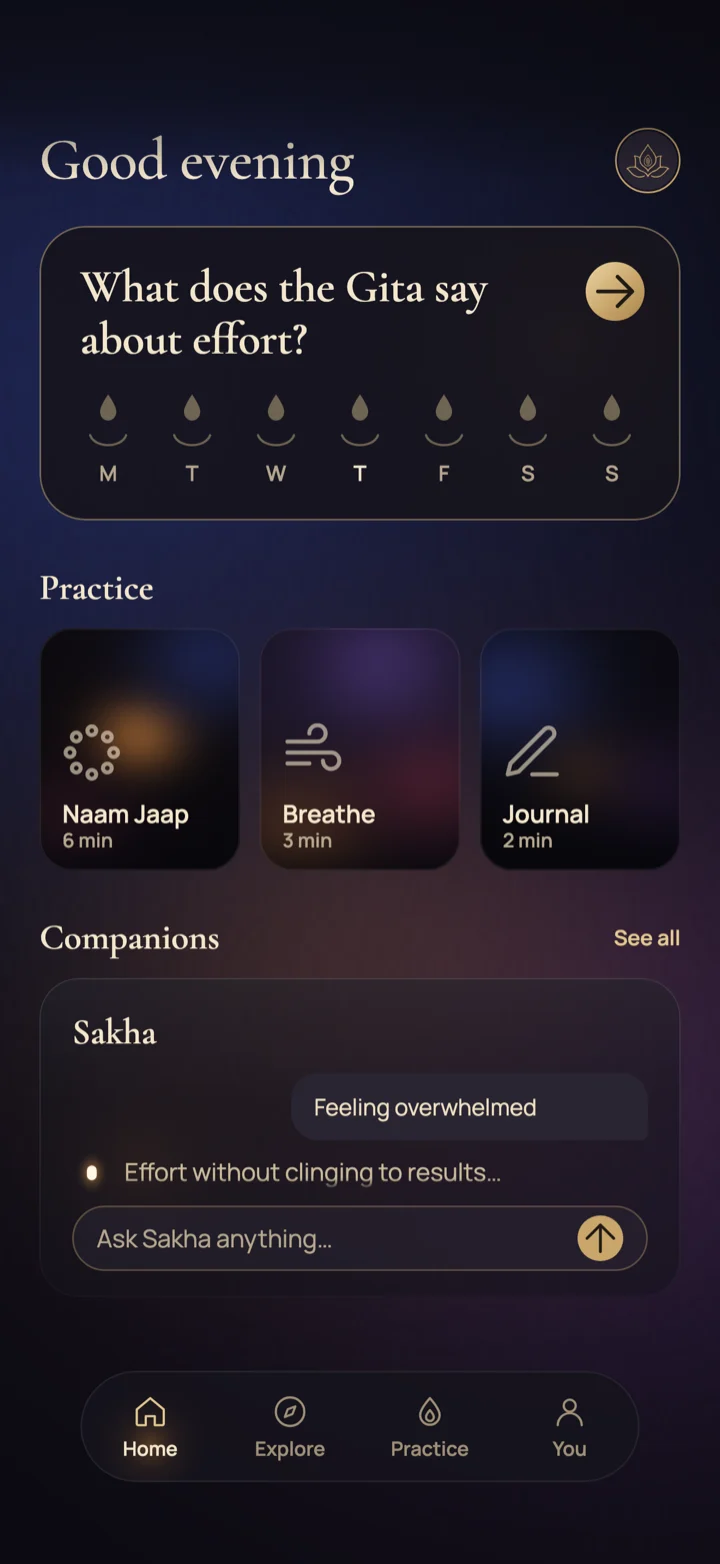
Bija's evening home screen: a question from the Gita with a week of lamps, practice tiles for Naam Jaap, Breathe and Journal, Sakha, and the tab bar.

Four rooms, one lamp.

A verse to begin with, a guide for your questions, a mantra to return to, and Ayurveda for the shape of the day.

  1. Begin the day with one verse.

    Daily verse. Each morning brings a verse in Devanagari, with its transliteration and meaning beside it. Listen to it, save it, read the commentary, or ask Sakha what it asks of you.
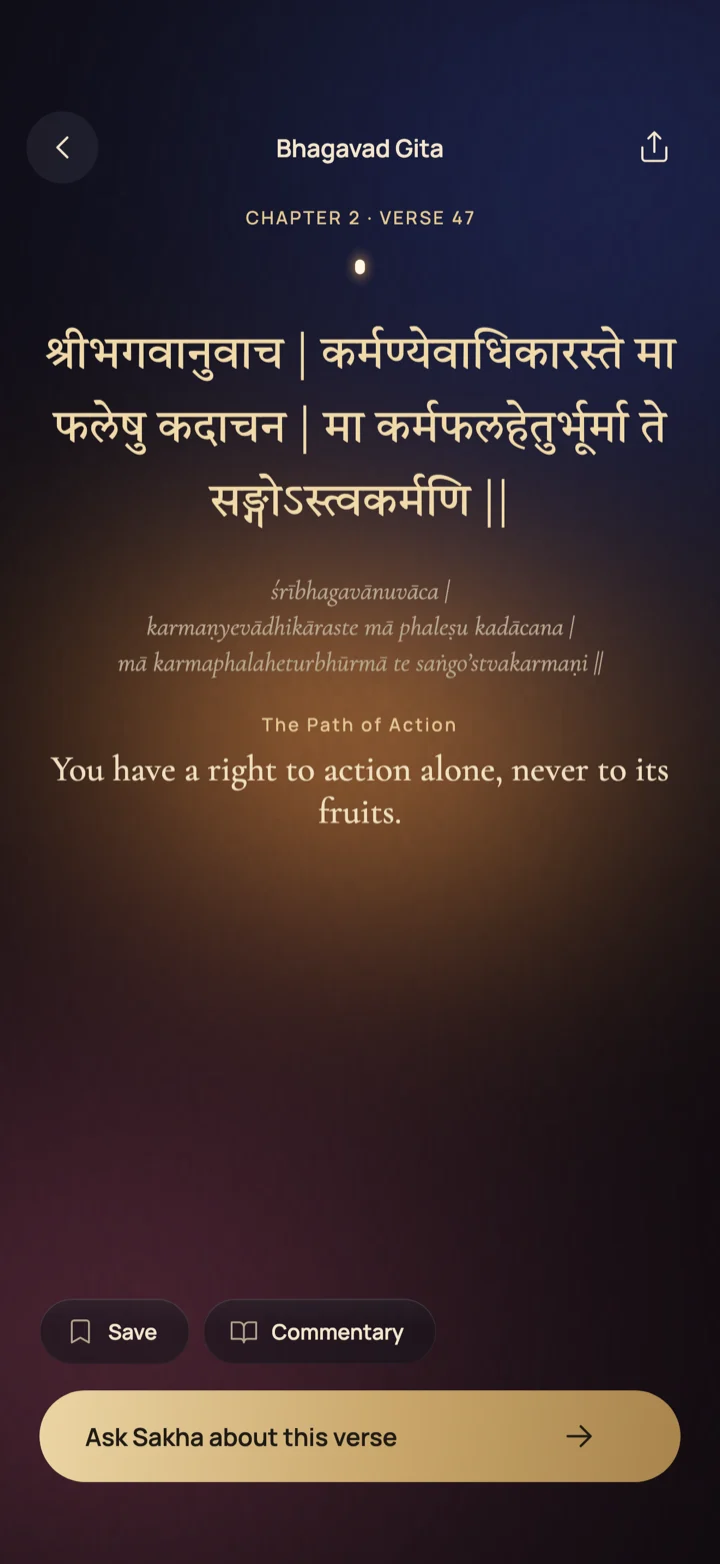
    Bija's daily verse screen showing Bhagavad Gita 2.47 in Devanagari, its transliteration, and the meaning: you have a right to action alone, never to its fruits.
  2. Ask about the texts, in your own words.

    Sakha. Sakha is a guide to the Gita, the Upanishads and the big questions. Every answer shows the verse it draws on, kept apart from the interpretation, so you always know which is which.
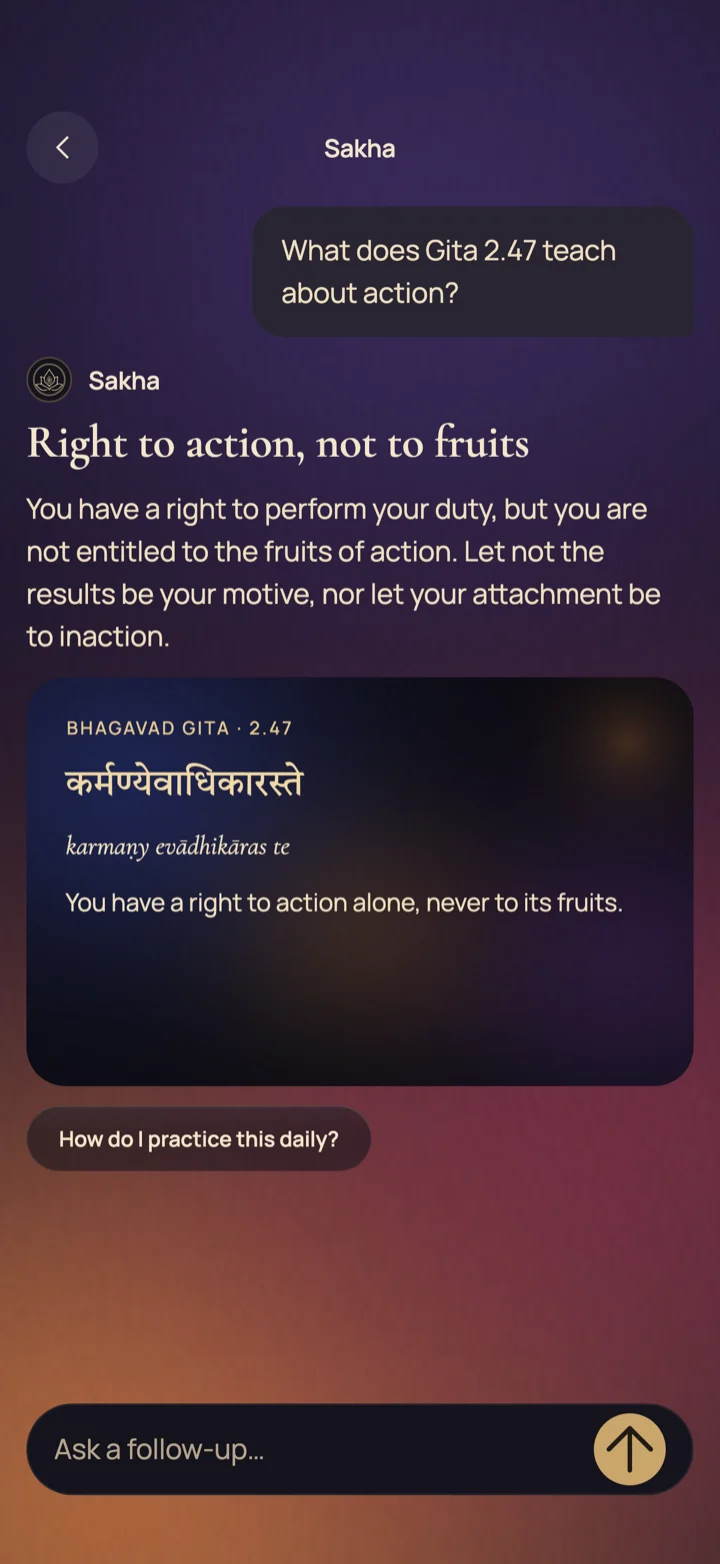
    A conversation with Sakha. The question is what Gita 2.47 teaches about action; the answer quotes the verse in a separate card.
  3. Chant, one bead at a time.

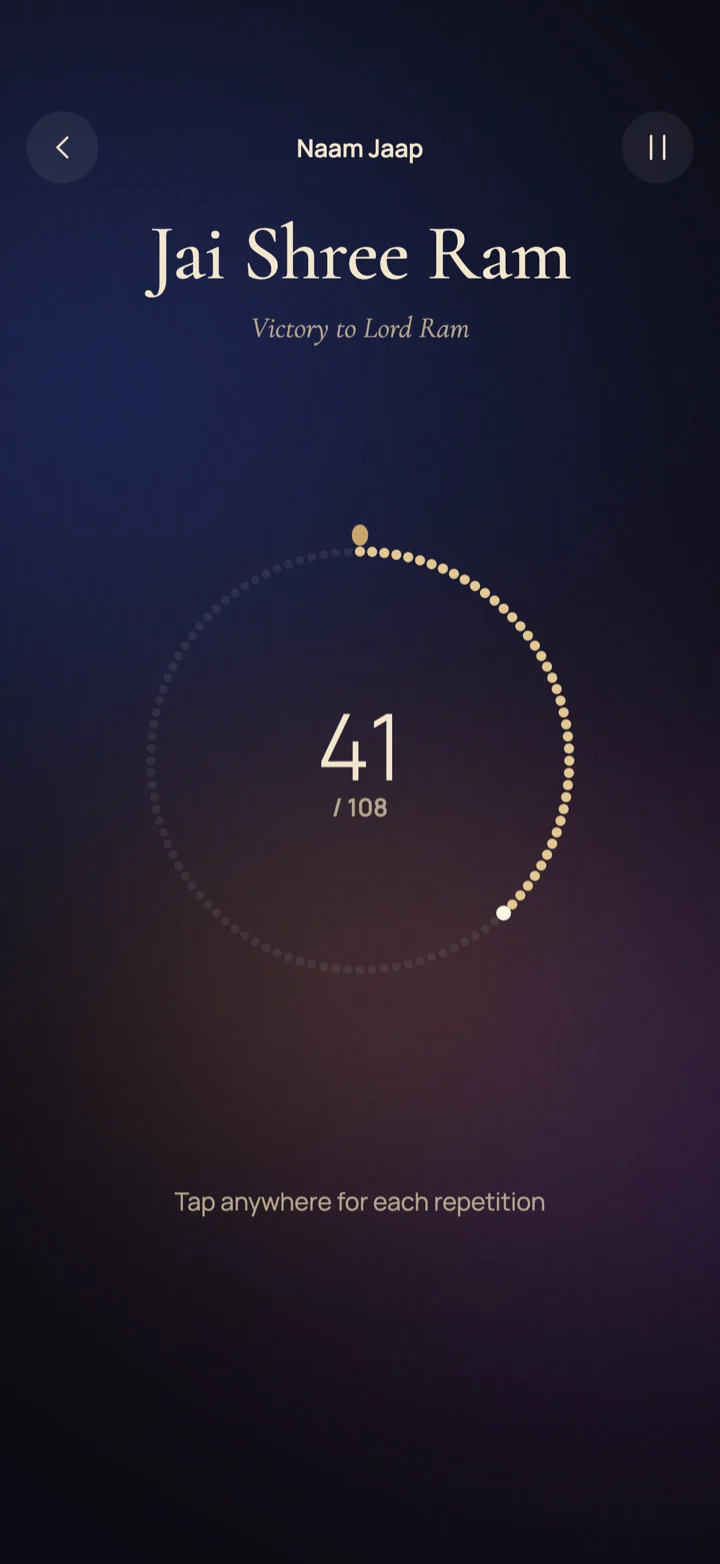
    Naam Jaap. Choose a name, such as Jai Shree Ram or Radhe Radhe, and a round of 27, 54 or 108. Tap for each repetition and the mala fills with brass. Your first round can be just nine.

    How to do naam jaap
  4. Ayurveda for the day you are having.

    Charaka. Charaka draws on the Charaka Samhita for daily rhythm: what to eat on a cool morning, when to rest, how to settle. Take the constitution quiz to learn your dosha. Traditional ideas for daily life, not medical advice.
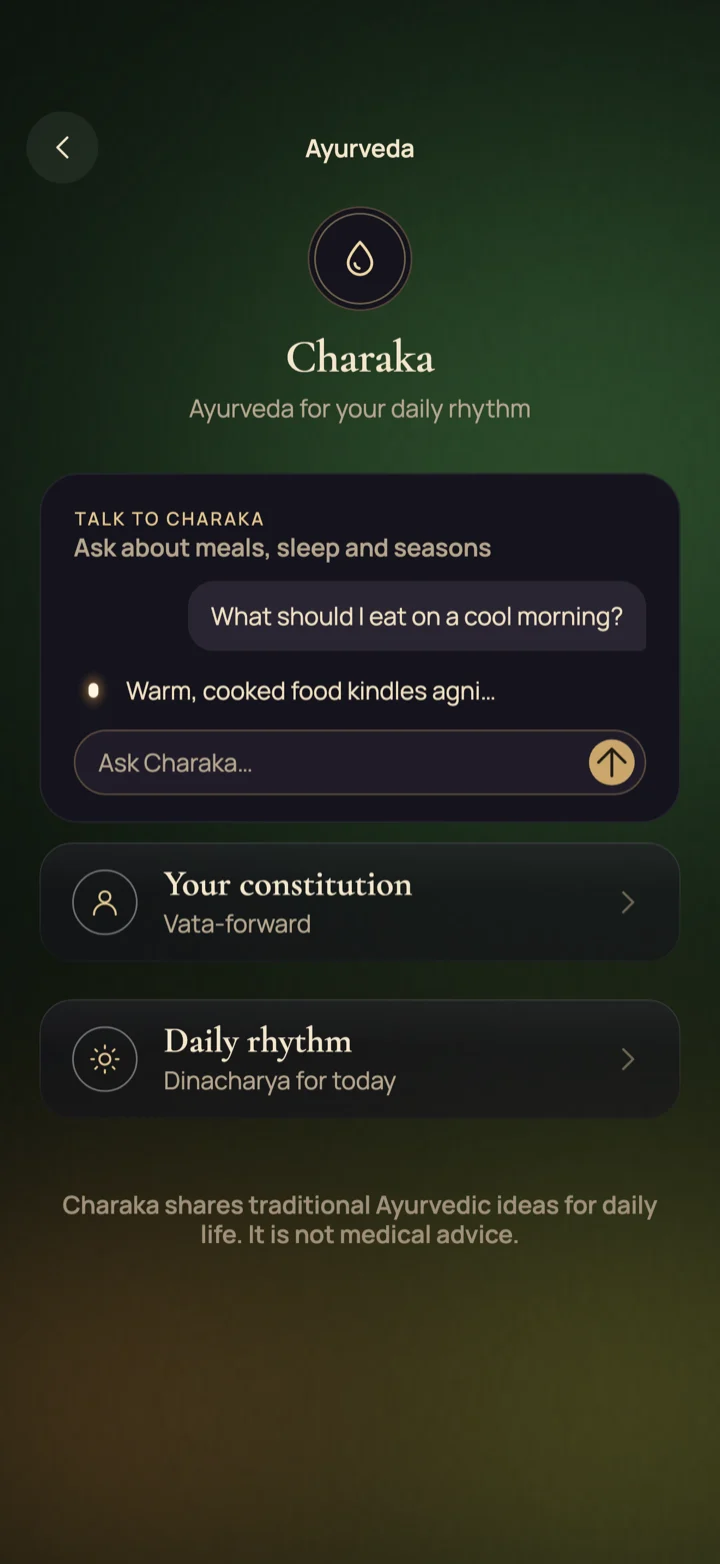
    Charaka, Bija's Ayurveda guide: a conversation about what to eat on a cool morning, plus Your constitution and Daily rhythm.
Bija's daily verse screen showing Bhagavad Gita 2.47 in Devanagari, its transliteration, and the meaning: you have a right to action alone, never to its fruits.

Take one slow breath with us.

Box breathing: in for four, hold for four, out for four, hold for four. In the app you can also choose relaxing breath or even breathing, for three to thirty minutes, guided by a soft bell, haptics, or silence.

Ready when you are

  1. Inhale
  2. Hold
  3. Exhale
  4. Hold

A lamp for each day you practise.

Chant, breathe, or answer the evening's question in your journal, and that day's lamp is lit. A missed day stays unlit, never red. No streak alarms.

Tonight, your journal asks

What was truly in your control today?
One question each evening, inspired by the Gita. Write a line or a page, then reflect with Sakha if you want a gentle follow-up.

More to explore, when there is time.

  • Stories

    A short story each day, in English or Hindi, with the teaching it carries and the verses behind it.

  • Paths

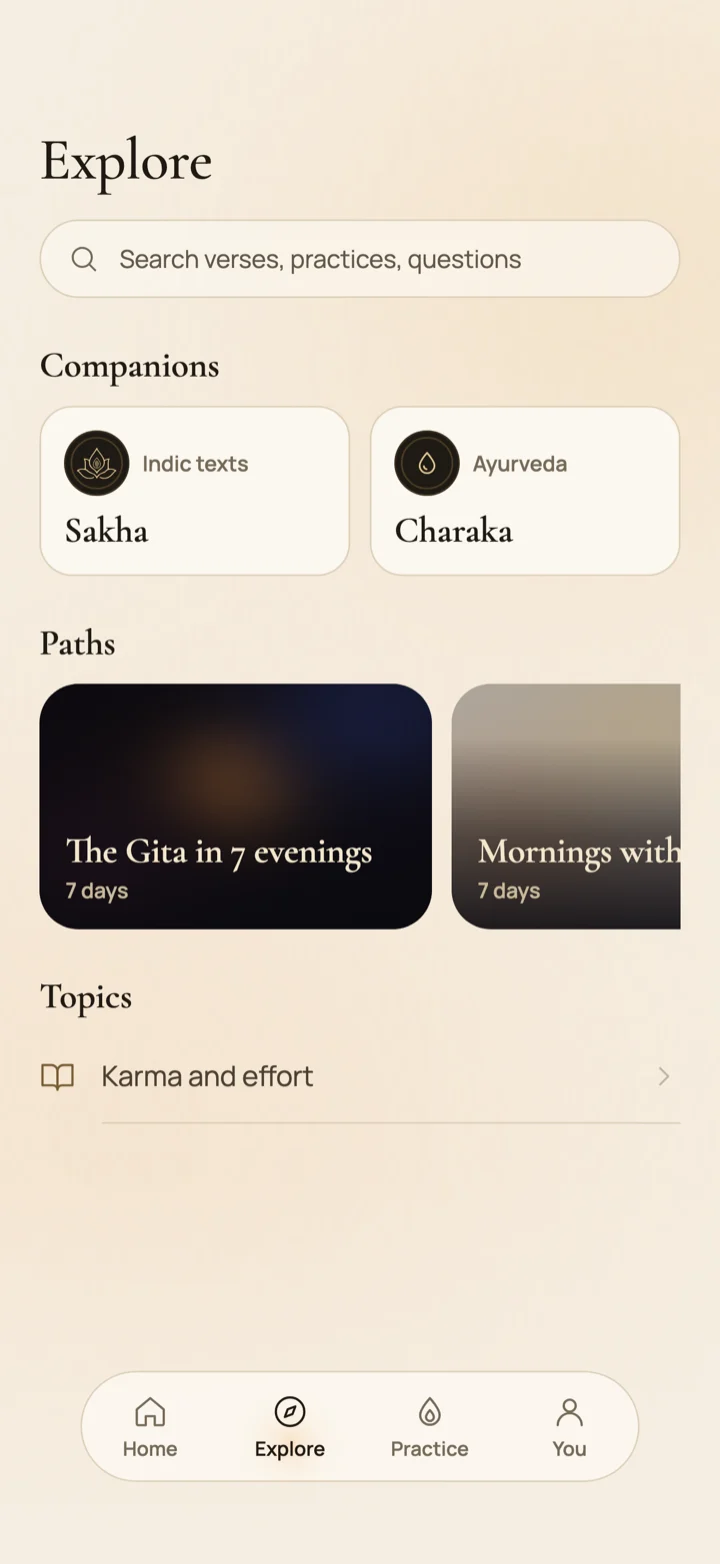
    The Gita in 7 evenings. Mornings with Charaka. Guided routes you walk one day at a time.

  • Topics

    Karma and effort, fear and uncertainty, dharma at work. Bring any of them to Sakha and begin from there.

Bija's Explore tab with the companions Sakha and Charaka, paths such as The Gita in 7 evenings, and topics like karma and effort.

Small promises, kept.

Bija is meant to be a pause in the day, not another feed.

  • Free on iOS and Android, with no paywall.
  • Sign in with Google, or Apple on iPhone, and delete your account and its data from the app whenever you choose.
  • One gentle reminder a day, at the time you choose. Nothing else.
  • Every verse shows where it comes from, kept apart from what anyone makes of it.
  • Charaka shares traditional Ayurvedic ideas for daily life. It is not medical advice.

Questions people ask.

Is Bija free?

Yes. Bija is free on iOS and Android, and there is no paywall inside the app.

What is Sakha?

Sakha is Bija's guide to the Indic texts. Ask about the Bhagavad Gita, the Upanishads, dharma or karma, or how a verse applies to your day. Answers show their source verse separately from the interpretation. Sakha is support between practice, not a replacement for a teacher you trust.

What is naam jaap, and how does Bija help with it?

Naam jaap is the repeated, quiet remembering of a divine name. In Bija you choose a mantra such as Jai Shree Ram, Shivaya Namah, Radhe Radhe, Jai Shree Krishna or Shamb Sadashiv, pick a round of 27, 54 or 108, and tap for each repetition while a 108-bead mala fills. Your rounds are kept in a history. Read how to do naam jaap.

Which breathing practices are included?

Box breathing (four counts in, hold, out, hold), relaxing breath (in for four, hold for seven, out for eight) and even breathing (five in, five out). Sessions run from 3 to 30 minutes, guided by a soft bell, haptics, or silence.

Do I need an account?

You can open Bija and look around first. To chant, breathe, write in your journal or talk with Sakha and Charaka, sign in with Google, or with Apple on iPhone, so your sessions and lamps are kept for you.

Is Charaka medical advice?

No. Charaka shares traditional Ayurvedic ideas from the Charaka Samhita for daily life, such as food, rest and daily rhythm. For health concerns, please see a qualified doctor.

Is Bija available in Hindi?

The app is in English. Verses appear in Devanagari with transliteration and meaning, and the daily stories can be read in English or Hindi.

How do I delete my data?

You can delete your account and its data from the You tab in the app, or follow the steps on our data deletion page. Data and account deletion.

Bija is free

Light the first lamp tonight, on iOS or Android.

Download on the App StoreGet it on Google Play